‘We often make use of low-fi prototyping (most commonly paper prototyping) when in need of quick feedback on our concepts, ideas, or flows, along with quickly communicating the aforementioned to colleagues and clients’ (Amsterdam, 2016).
URL for Adobe XD Prototype – https://xd.adobe.com/view/71636c1d-7ce8-4bd0-ba6a-f1bf736e74cb-2430/
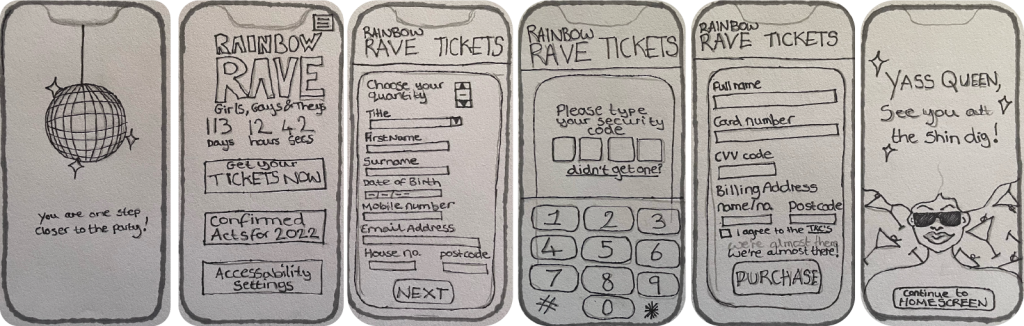
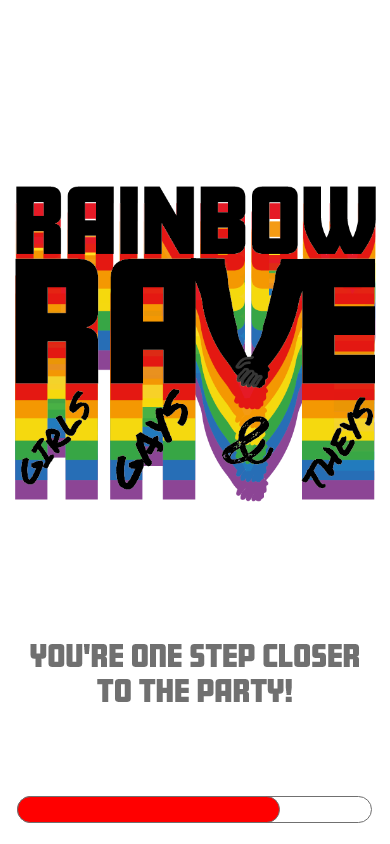
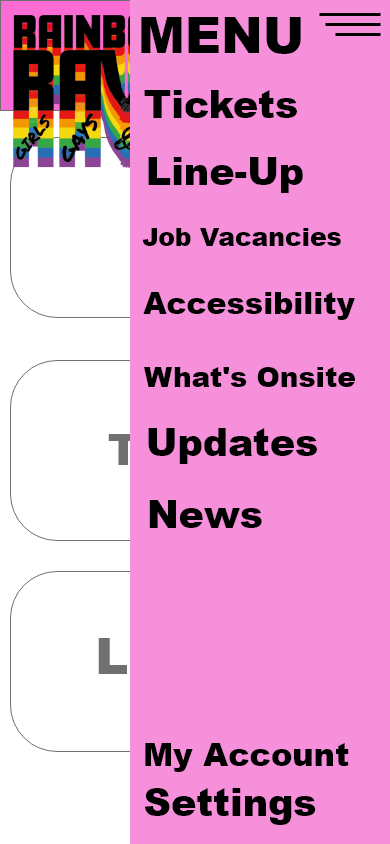
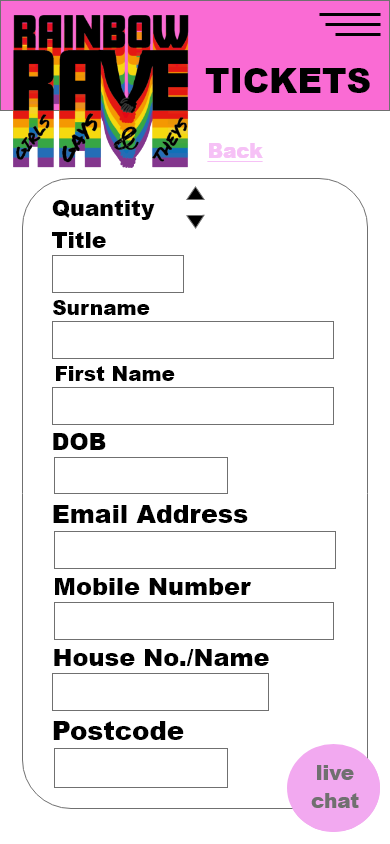
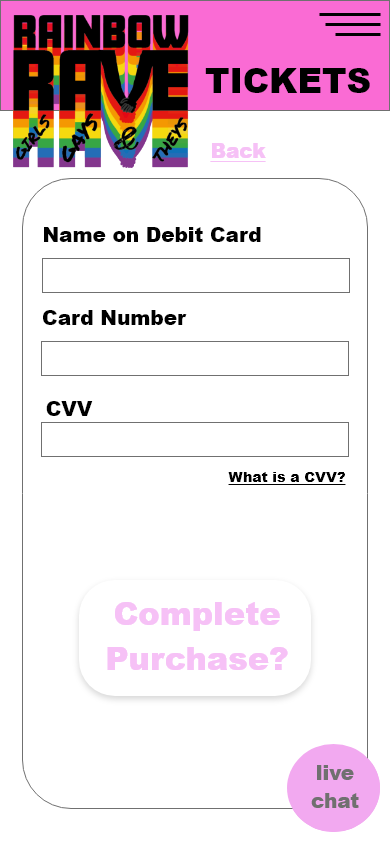
This low fidelity paper prototype shows the process of the ticket purchasing, this includes a loading screen and the screen the user will be presented with when the purchase is complete. The prototype shows the app format for the festival.
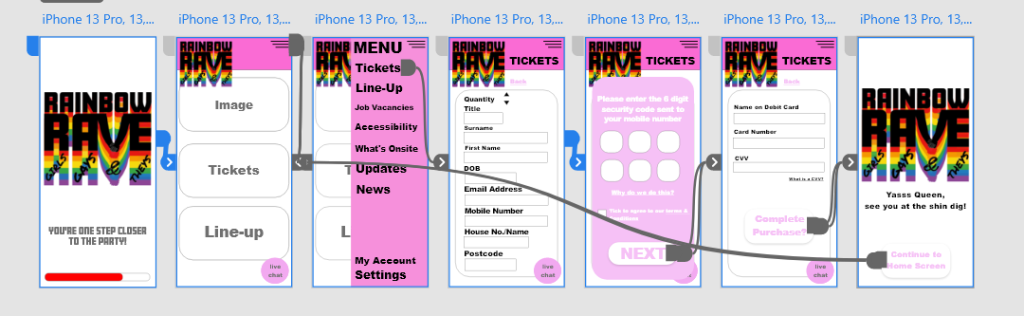
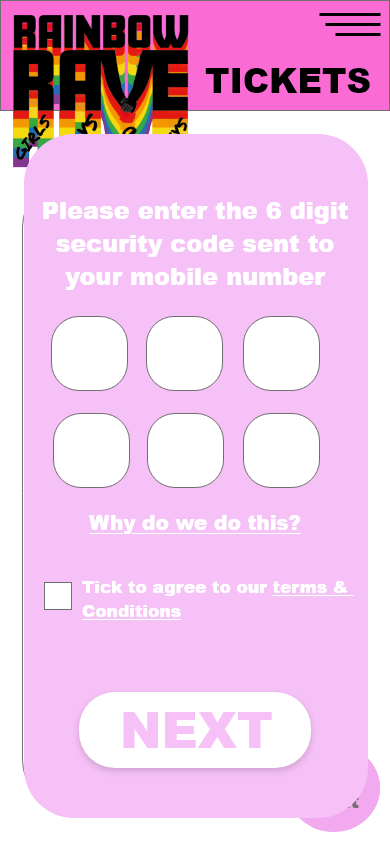
This is a rough layout for how the app will look and how it will work. When transitioning from the contact details screen to the bank details screen, a pop-up will appear, asking the user to input a security code sent via text. This added step provides additional security for the user, making sure other users aren’t stealing their identity and contact details to make a purchase.
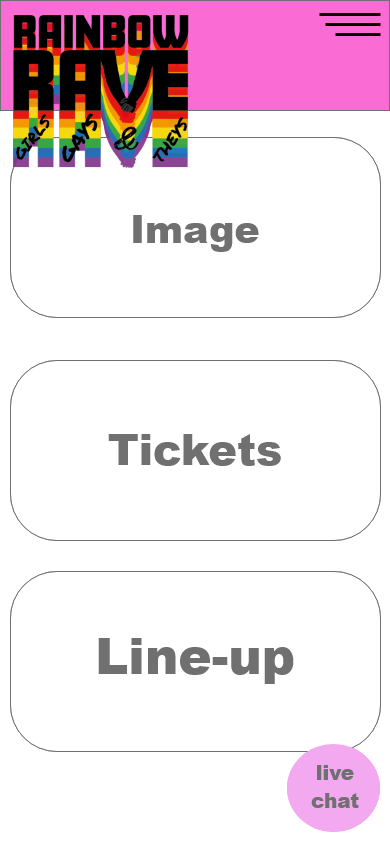
When looking back at the rejected design for the web page, the menu icon and drop-down menu have been moved to the right-hand side of the page, creating distance from the logo which reduces the risk of the user accidentally clicking what they didn’t want to. Another option that has now been included is the floating live chat icon in the bottom right corner, the idea behind the live chat option is for user to be able to enquire about any queries regarding the festival and the navigation of the web and app design. The titles on the top banner have now been increased in size, minimizing the negative space and are now easily readable for those with vision impairments.
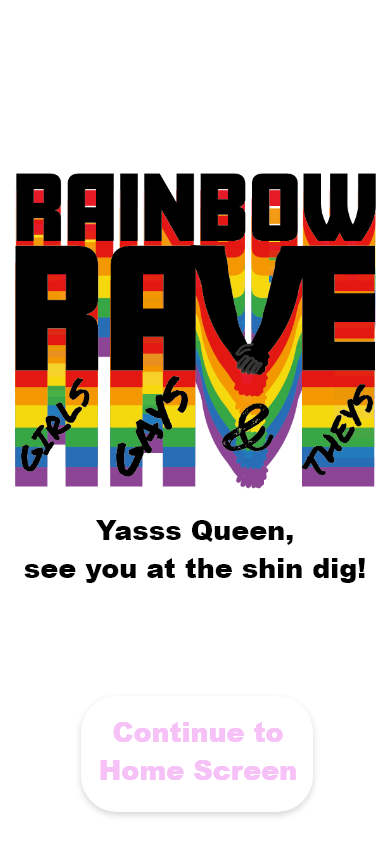
When the purchase is complete, the user will be presented with a screen that includes visual illustrations and a message that includes commonly used slang within the LGBTQIA+ community. The aim of this is to make the user feel satisfied with their purchase.
References
Amsterdam, A.I. (2016). Low-fi prototyping: What, Why and How? [online] Medium. Available at: https://blog.prototypr.io/low-fi-prototyping-what-why-and-how-24f77d9f4995 [Accessed 14 Mar. 2022].