Categories
Development Log

Rooted in Hull Graphic Design Master Plan

A master plan is used in design for long-term planning, it’s a document that helps guide the design process to reach its full potential and fit the brief that clients have set out (Worldbank.org, 2009).

CEO of Rooted in Hull, Adrian Fisher stated that he wants a way to ask people who have money for money to donate to the less fortunate and fund veg boxes to them. With this brief, a master plan was created to help start the design journey towards Adrian’s brief.
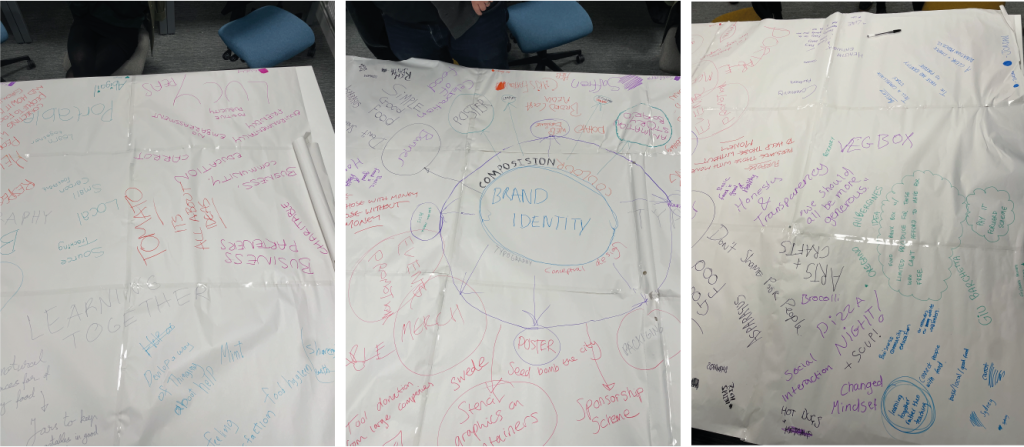
Figure 1: Photos taken from the group master plan discussion, all students had an input and colour coordinated written ideas.

During a group discussion, many ideas and design concepts were spoke about and the master plan was evolved. Design ideas such as merchandise, app design, stationary packs and web design were discussed. With this group plan, a digital version was created including all the ideas spoke about. Plans and ideas from Adrian’s interview with the Graphic Design students and lecturers were picked apart and reconstructed into this master plan.
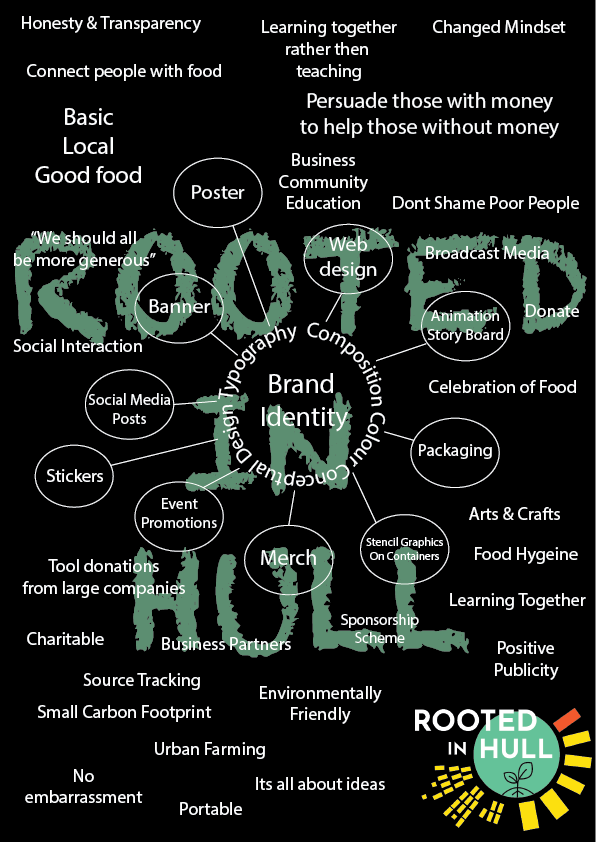
Figure 2: First digital redesign of the big group master plan, this digital version shows more organised ideas and becomes a lot easier to read (Rooted in Hull Logo, n.d.).

This is a rough digital redesign of the group master plan. The colours on this digital design are very simple and they remain within the Rooted in Hull’s logo colour palette. The text is white to create contrast with the dark background and is easily readable. The font is a simple sans-serif type face, this again, makes the text easily readable and doesn’t overly complicate the text against the second font used in the background design. This is a chalk-like font to create the effect of a chalkboard which relates again to why the main body of text is white.
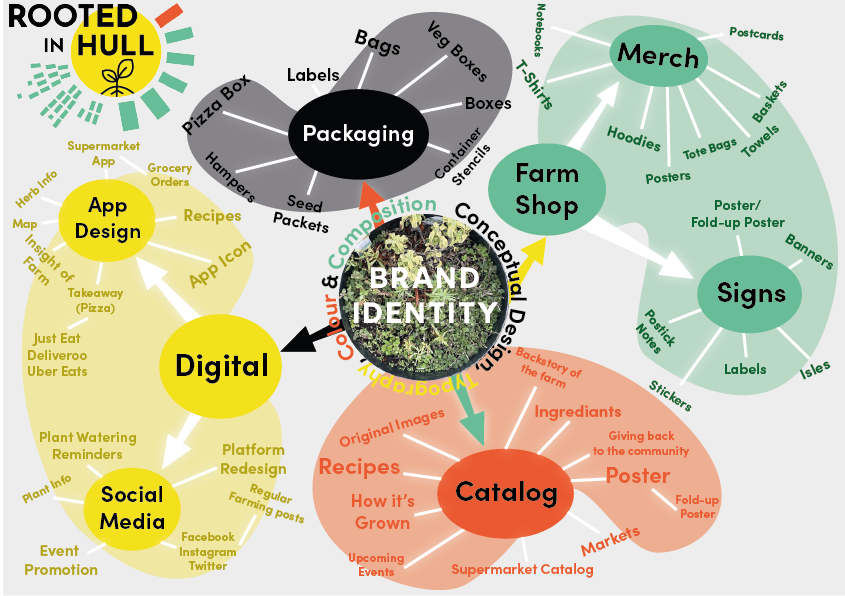
Figure 3: Final master plan design containing more personal plans and ideas to help the design process of artwork 2. More colour is included but is still easily readable.

After some further discussions about the design options, a more personal master plan was created. This included individual idea likings from the main group master plan. In this final design, there are four categories which have been personally chosen to extend with more ideas. The initial design for this master plan is a lot funkier with the blotches of colour, it’s a lot more colourful but remains within the Rooted in Hull’s logo colour palette. For each of these four categories more ideas have been developed, two of these categories have sub-categories which show in-depth concepts. App design and merch, the two with sub-categories, are the ideas that want to be enhanced further throughout the design process and are better concepts for what Adrian is asking for.

Bibliography.

Rooted in Hull Logo. (n.d.). [Online Image] Available at: https://www.rootedinhull.org.uk/ [Accessed 19 Jan. 2022].

Worldbank.org. (2009). Master Planning | Urban Regeneration. [online] Available at: https://urban-regeneration.worldbank.org/node/51 [Accessed 19 Jan. 2022].
Categories
Development Log

Rooted in Hull Graphic Standards

What are graphic standards?

Graphic standards are used within companies to provide a structure for using logos, colours, typography, and composition. It shows the correct way a logo should be positioned in every instance, an appropriate colour palette and the fonts used within the company’s visual graphics. Graphic standards should contain information about the branding and should be easily readable (www.usi.edu, n.d.).

Here are 3 A4 pages of Rooted in Hull’s graphic standards manual design, based around original artwork 1 and 2. These 3 pages are informative about colour, typography, composition, and photography. The manual has been designed with the same colour palette as the Rooted in Hull’s logo and uses the same typeface throughout.

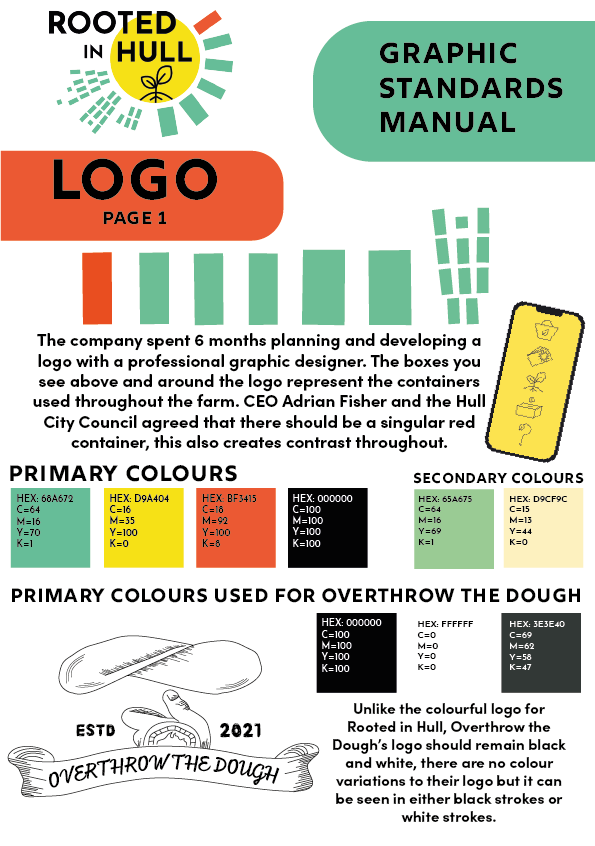
Figure 1, Page 1: This is the first page of the graphic standards manual for Rooted in Hull, it looks at the logo design, the primary colours used in the logo and even contains a back story to the design process of the logo (Rooted in Hull Logo, n.d.).

The first page is focused on Rooted in Hull’s logo with information on the story behind their logo design process, which CEO Adrian Fisher told the graphic design students and lecturers during his interview. The colourful blocks around the logo have been deconstructed and placed in the centre of the page to show a close view of what the text below is stating, choosing to talk about the blocks from the logo gives them a lot more personality as many people will just see them as a random design. In the second half of the page there are squares of primary colours used within the logo and the visual graphics of artwork 1 and 2. Included are the HEX codes of these colours, found using Adobe Capture, for other designers to use. There is a small section at the bottom of the page showing Overthrow the Dough’s primary and secondary colours used in Artwork 1.

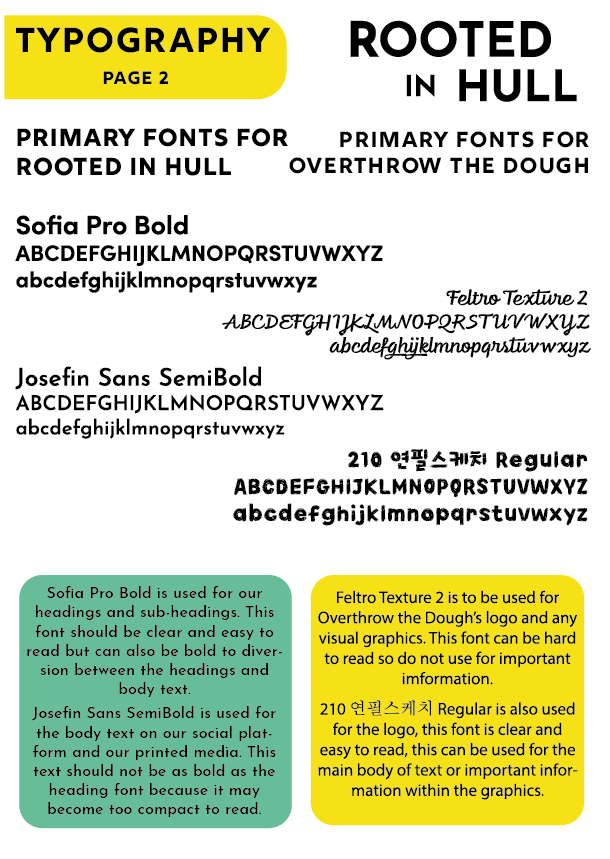
Figure 2, Page 2: This page of the manual shows the typefaces used for Rooted in Hull and Overthrow the dough’s visual graphics, this page also includes information on where these fonts are used and how they should look.

The second page shows the typography used within Rooted in Hull and Overthrow the Dough’s visual graphics, this includes both logos, 2D designs and digital artwork, which can be found in Artwork 1 and 2. The left side of the page shows the primary fonts of Rooted in Hull in flushed left, on the right side is Overthrow the Dough’s primary fonts in flushed right. All primary font examples show both upper case and lower-case alphabets to show the audience the typeface variations. At the bottom of the page there are coloured blocks containing information on the primary fonts and where they should be used. The fonts you see for Rooted in Hull’s side are similar typefaces used in their logo and web design, these were found using Adobe Capture.

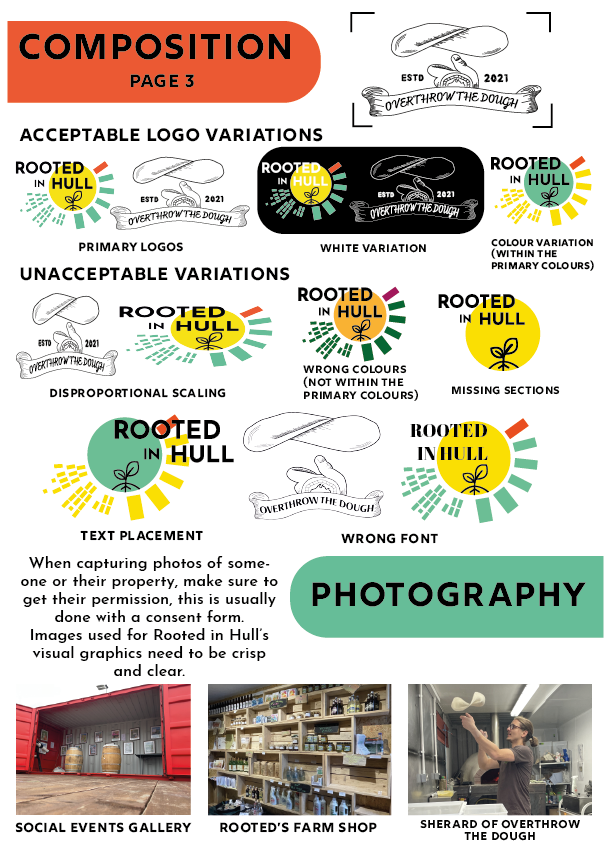
Figure 3, Page 3: The final page gives an overview on good and bad examples of composition when using the two logos, there is also a snippet of the page showing photography, offering photography advice within Rooted in Hull’s property.

The third page shows the importance of composition within the logo placement. The first half of the page shows acceptable and unacceptable variations of the logo placement, this includes useful variations of Rooted in Hull and Overthrow the Dough’s logo. The second half of the page contains information on photography and advice when capturing photos of Rooted in Hull’s staff or their property.

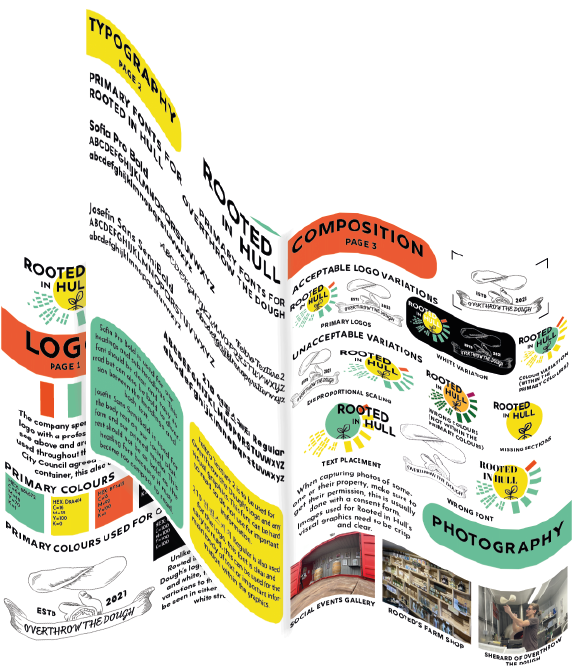
Figure 4: This is an example of how the graphic standards will look in a manual form.

Bibliography

Rooted in Hull Logo. (n.d.). [Online Image] Available at: https://www.rootedinhull.org.uk/ [Accessed 19 Jan. 2022].

www.usi.edu. (n.d.). Importance of Graphic Standards – University of Southern Indiana. [online] Available at: https://www.usi.edu/brand/importance-of-graphic-standards/#:~:text=Graphic%20standards%20provide%20a%20sound [Accessed 20 Jan. 2022].

Categories
Development Log

Press Release

Adrian Fisher
Rooted in Hull, St Peter Street,
Hull, HU9 1AA
Adrian@rootedinhull.org.uk
09010389

CEO of Rooted in Hull, Adrian Fisher meets first cohort of new BA (Hons) Graphic Design programme to discuss new project

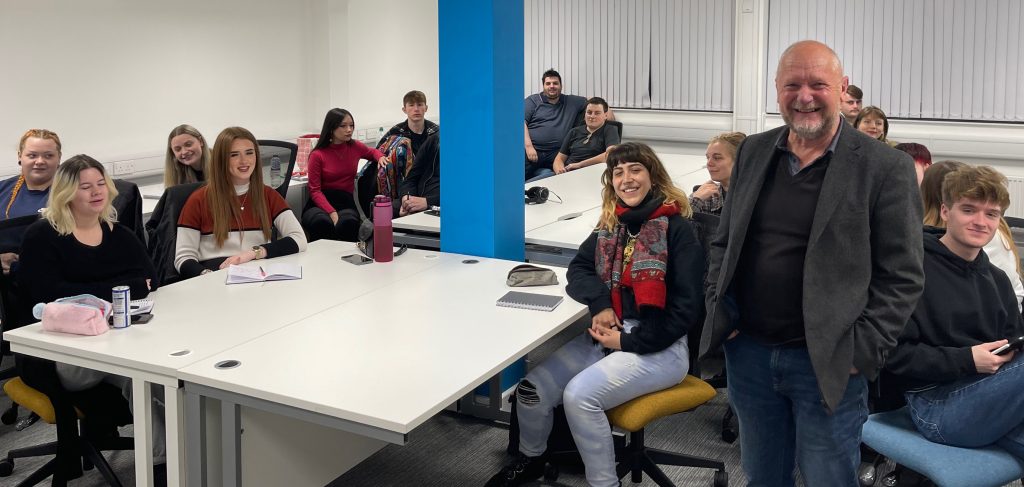
On Tuesday 2nd November, the University of Hull’s Graphic Design Students had the pleasure of meeting Adrian Fisher, the CEO of Rooted in Hull. Interviewed by Robert Consoli, BA (Hons) Graphic Design programme leader, lecturer in Digital Media. Adrian gave an insight into who Rooted in Hull who and what they do for the community. Adrian and Robert were accompanied by Jason Hayhurst, Screen Subject Group Director, Lecturer in Digital Media and Terry Westby-Nunn, Lecturer in film studies, TV production specialist.

The 25 Graphic Design students are currently studying 2D Visual Design in the newly refurbished Graphic Design Studio Space in the University of Hull Media Centre. The programme is designed to be flexible enough to integrate real projects into the curriculum whenever possible.

The Hull City Council wanted to bring education within food banks to the city, which led Adrian and his only partner at the time, Mark Cleaver to London where they learnt more about what the council had suggested. During their time in London, they discovered new ideas of teaching children the knowledge on the simplicity of enjoying food. This then led to the establishment of Rooted In Hull in 2014.

During the interview, Adrian stated that the goal of the company is not to try and make Hull a healthier city, they’re not trying to pressure anyone to become vegetarian or vegan. Their main focus is trying to bring people together to enjoy basic, local and fresh food within each other’s company. Rooted in Hull works closely with low-income families, providing them with veg boxes and opportunities with weekly social events, offering hot drinks, sandwiches and fresh soup. Rooted in Hull also offer cooking and crafting workshops and host live music events, these are offered for free so those less fortunate can take part.  

Adrian laid out his ideas and how the students can help. The company would like a way to ask people with a good income for money to help with lower income families, he would also like an honest explanation as to where the money will go and how it will help. The plan that Adrian has set out for the students can now be spread across different design medias. Posters, leaflets and merchandise can be placed across Hull and surrounding areas to promote the charitable donations and attract more custom. Digital media such as advertisement, web design and social media posts can also be created to attract the younger generation.


By Saffron Piercy